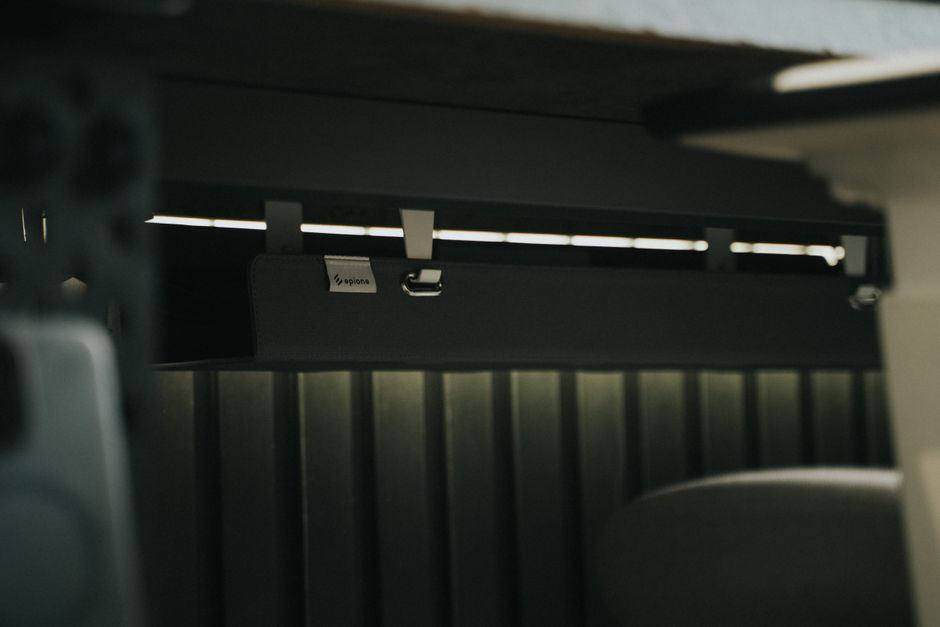
Why a cable tray is the easiest desk upgrade
Reviewed by the CableTrayPicks team · last updated 2026-08-11
A power strip, a laptop charger, a monitor cable, and a couple of USB leads add up fast — and once they're all dangling under your desk, they collect dust, get tangled, and make it hard to move your chair without snagging something. A cable management tray gathers everything into one enclosed shelf, out of sight and off the floor.
Most trays mount in one of two ways: clamp-on (no drilling, works on almost any desk, but weight capacity is a bit lower) or screw-mount (needs a couple of holes, but holds more and sits flush). Below, we compare four well-reviewed 2026 models across exactly that trade-off, plus size and budget.
If you're also tidying up the rest of your setup, a cable tray pairs well with a laptop stand or a monitor arm — but on its own, it's usually the single change that makes an under-desk area look intentional instead of accidental.
A cable tray hides the mess under your desk, but it doesn't solve two related problems: where the power strip itself lives, and how the cables running from the tray to your monitor or laptop stay bundled instead of splaying out across the floor. Most people who install a tray end up mounting a power strip next to it and adding a cable sleeve for the runs that are still visible.
Mounting style
No-drill clamp mounts are faster to install and fully reversible; screw mounts are more secure and typically support more weight.
Weight capacity
A single power strip and a few cables is light, but add a mini PC, switch, or power supply and you'll want a tray rated for 15+ lbs.
Length and desk fit
Measure your desk width first — a tray that's too long can hit desk legs or drawers, while one that's too short won't clear your full cable run.
Material and ventilation
Mesh or fabric trays let heat escape from power bricks and chargers; solid metal trays look cleaner but hold heat in a bit more.
Tray + power strip placement
Mount the power strip inside or directly next to the cable tray so cords have the shortest possible run between the outlet and the tray -- mounting them far apart just recreates the clutter the tray was meant to solve.